PAST EXHIBITION
CADA CUERPO ES OTRA - SAELIA APARICIO & NICOLE CHAPUT
JULY - AUGUST 2026
A body is never only a body. It is organism and cultural construct, image and lived experience, memory and projection. It is where matter meets language. Bodies absorb stories, inherit myths, carry histories and imagine futures. They are porous, unstable and in constant expansion.
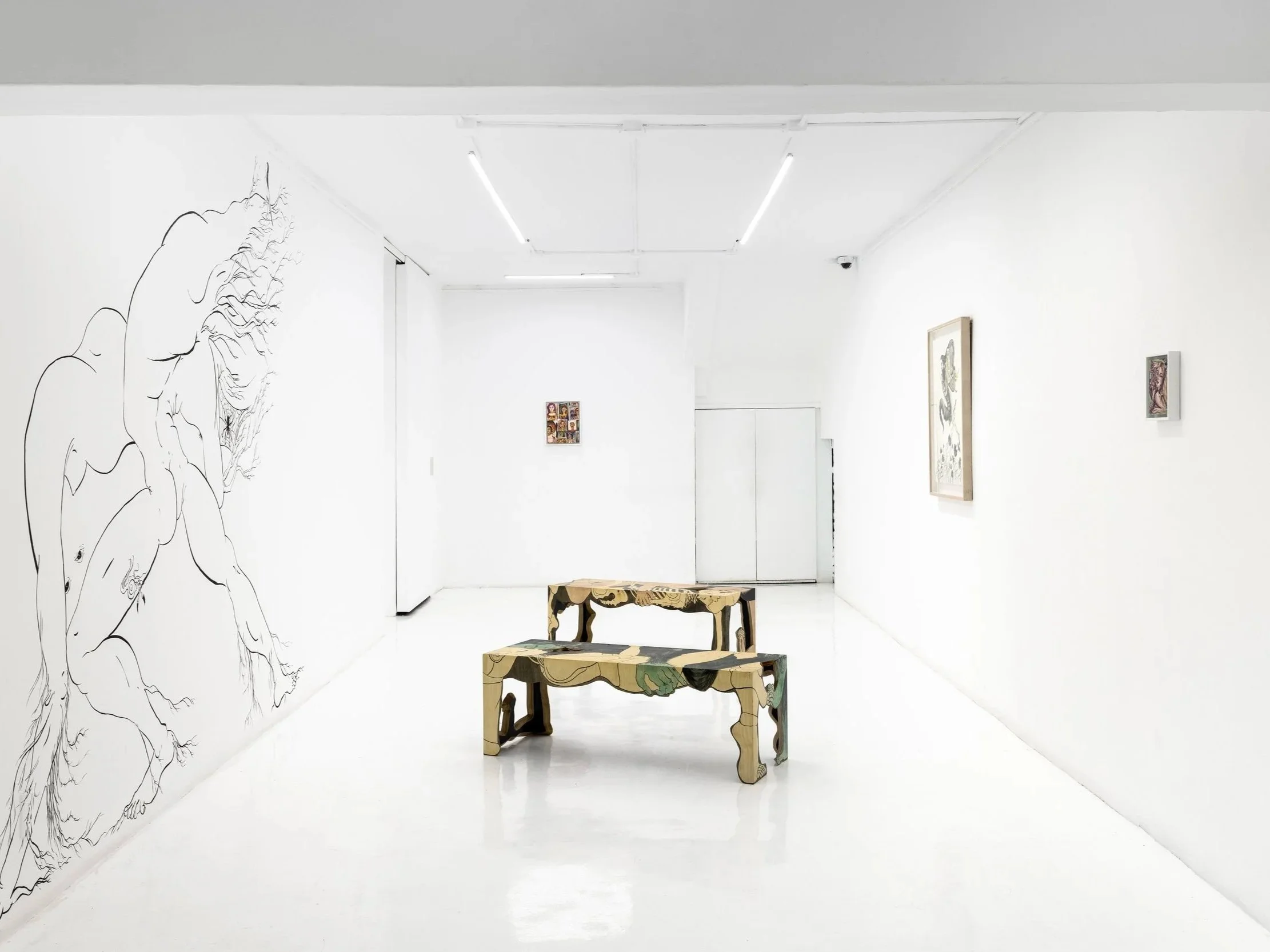
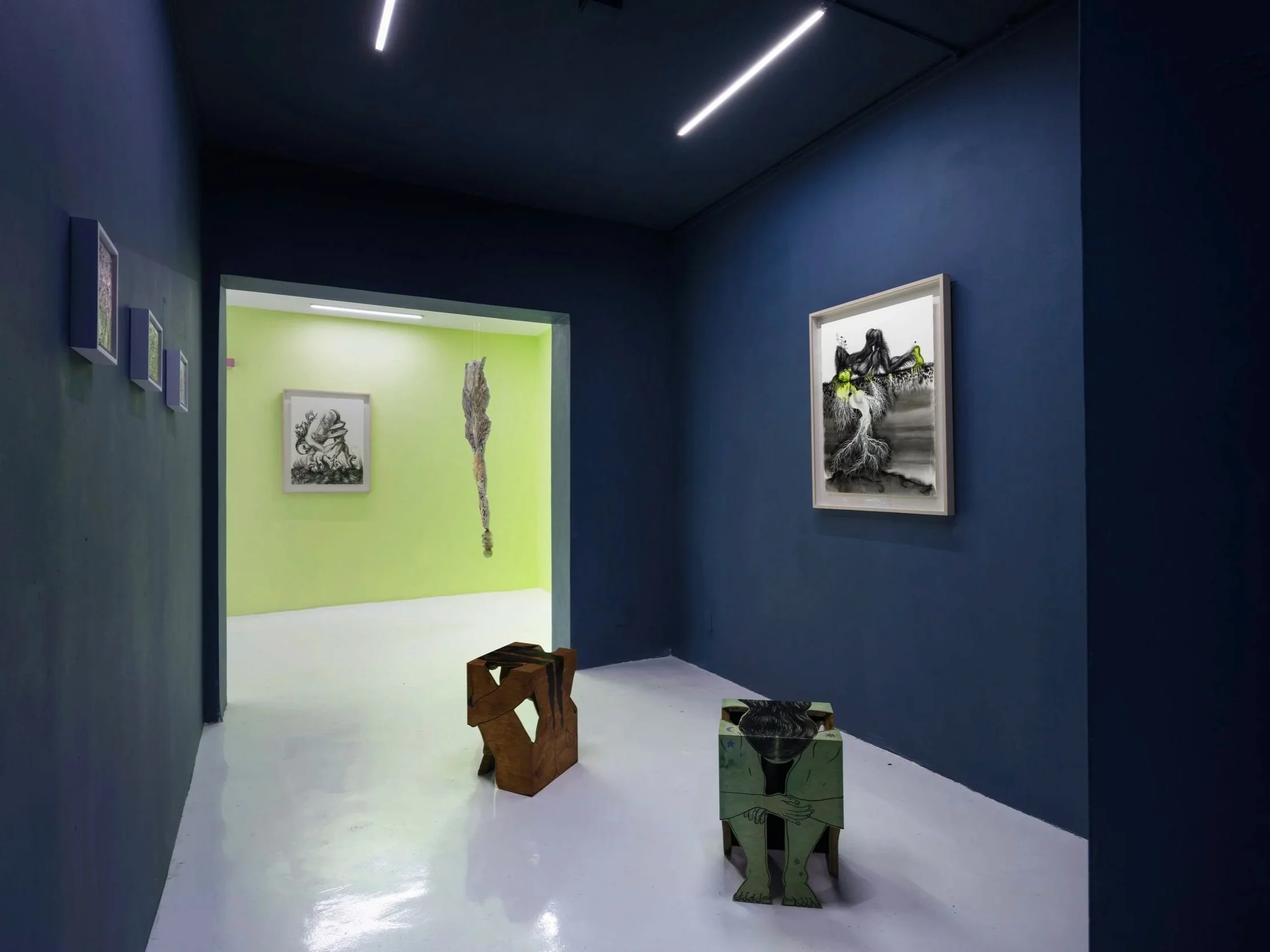
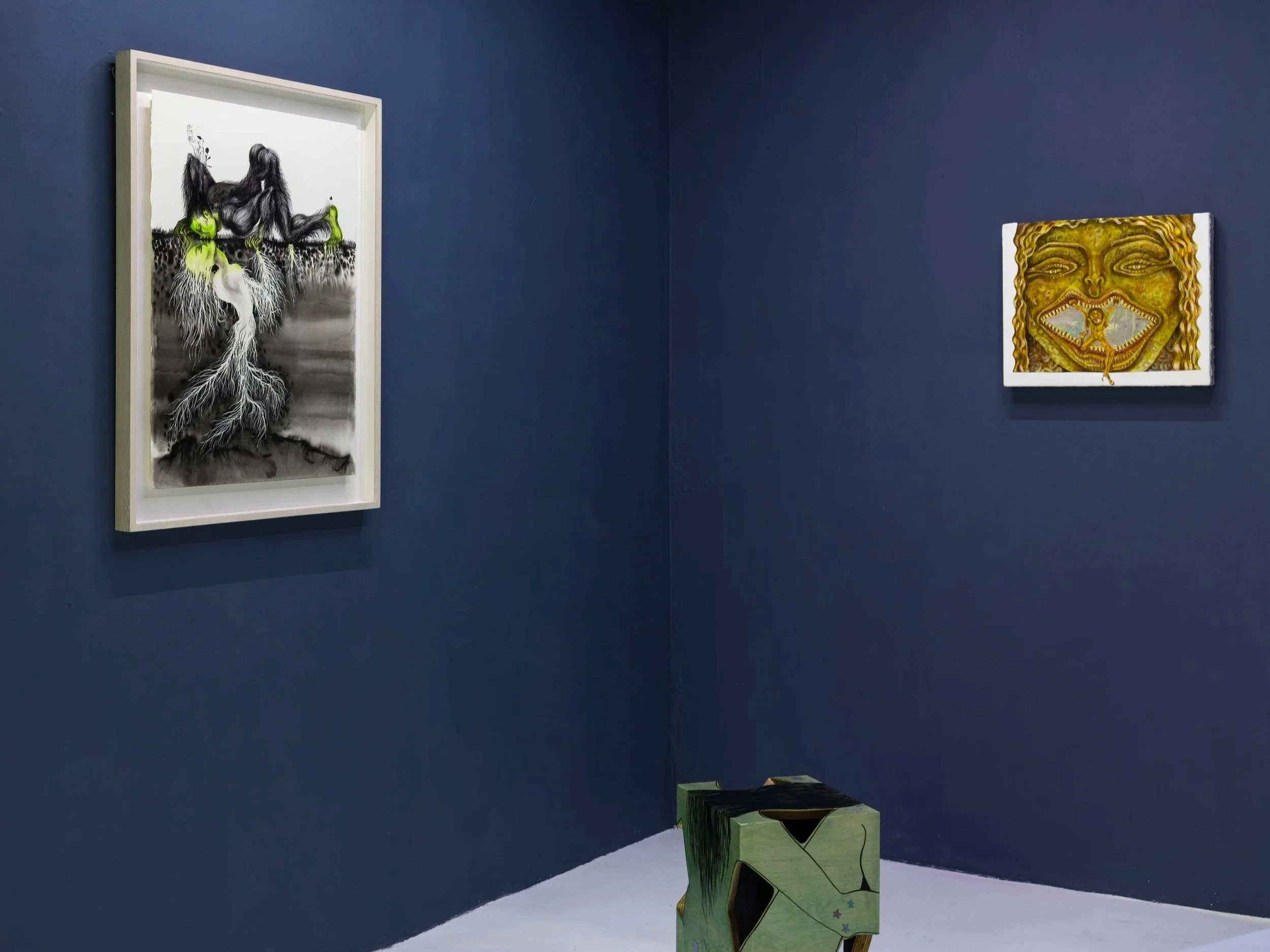
The bodies that inhabit Cada cuerpo es Otra seem to exceed their own contours. They sprout roots, cradle forgotten myths, grow fur, bloom into flowers, dissolve into paint, become furniture or quietly merge with the landscape. Within a single figure coexist tenderness and monstrosity, intimacy and humor, folklore and art history, anatomy and fantasy. Each body unfolds as a world in itself, where multiple stories take place simultaneously, defying fixed binaries.
The exhibition begins with a grammatical hesitation. In Spanish, cuerpo is grammatically masculine. Convention would ask for otro. Instead, the title insists on Otra. The expected agreement is suspended, opening a small but meaningful fissure within language itself. Rather than proposing a new category, the title invites us to linger in that moment of uncertainty, suggesting that perhaps no body ever fully coincides with the words that attempt to define it. Language, like the body, resists fixed boundaries.
This refusal of containment echoes throughout the exhibition. Nicole Chaput and Saelia Aparicio do not present the body as a stable identity but as a space of continuous expansion, where different temporalities, materials and imaginaries coexist. Their bodies are never singular. They are inhabited by archetypes, memories, other species and inherited images.
Although their visual languages are profoundly distinct, both artists imagine hybridity as a generative condition rather than an exception.
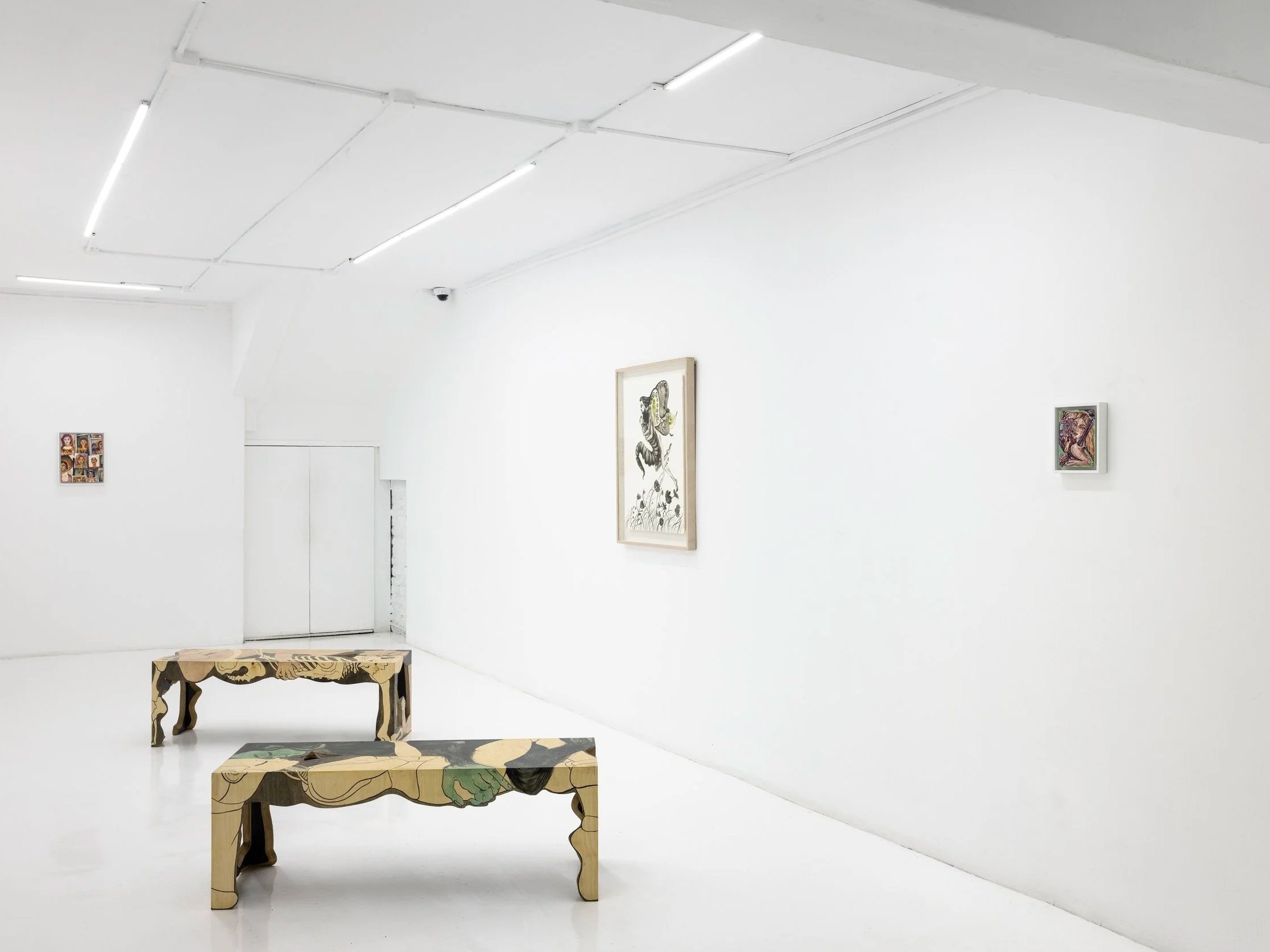
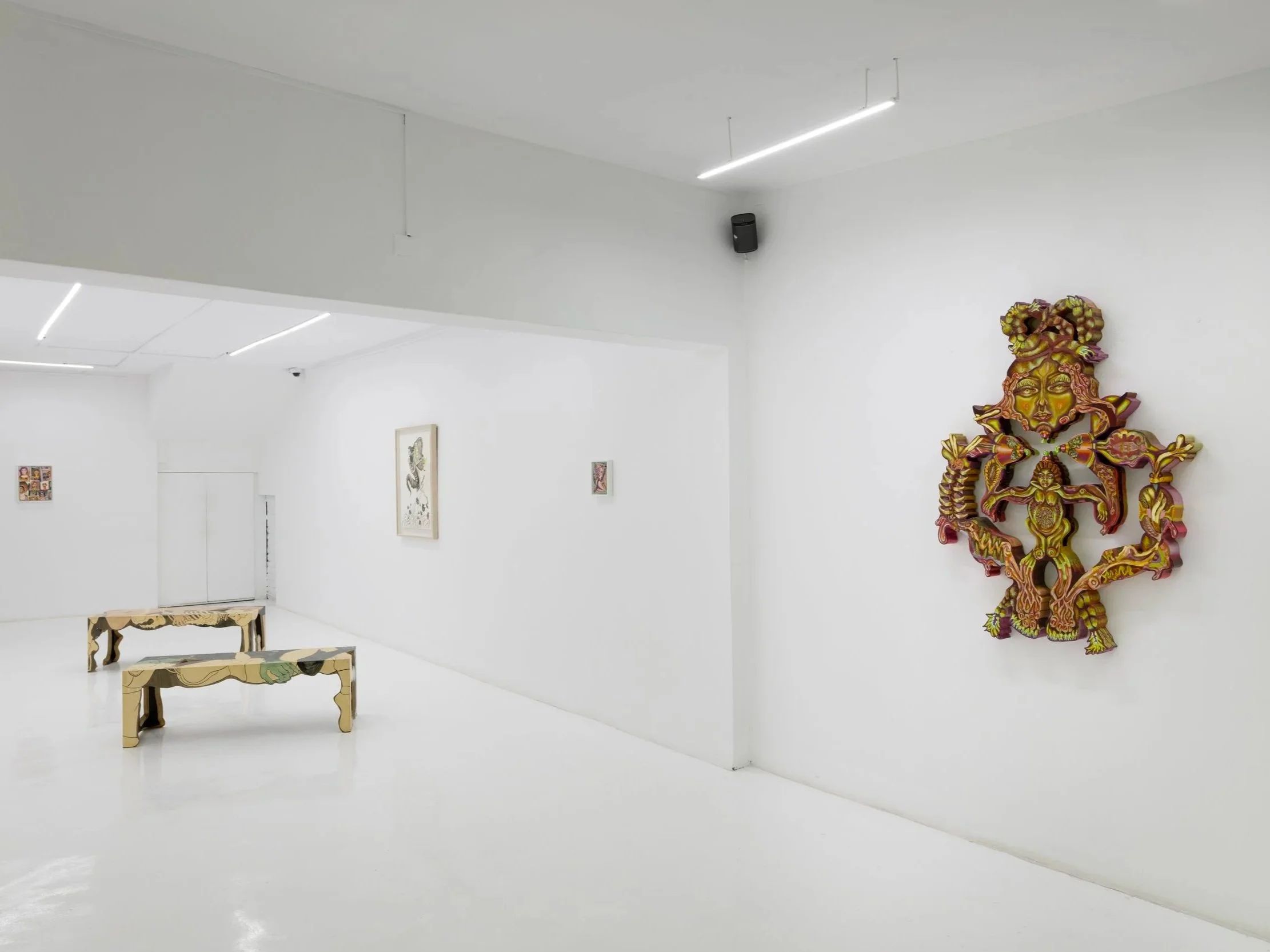
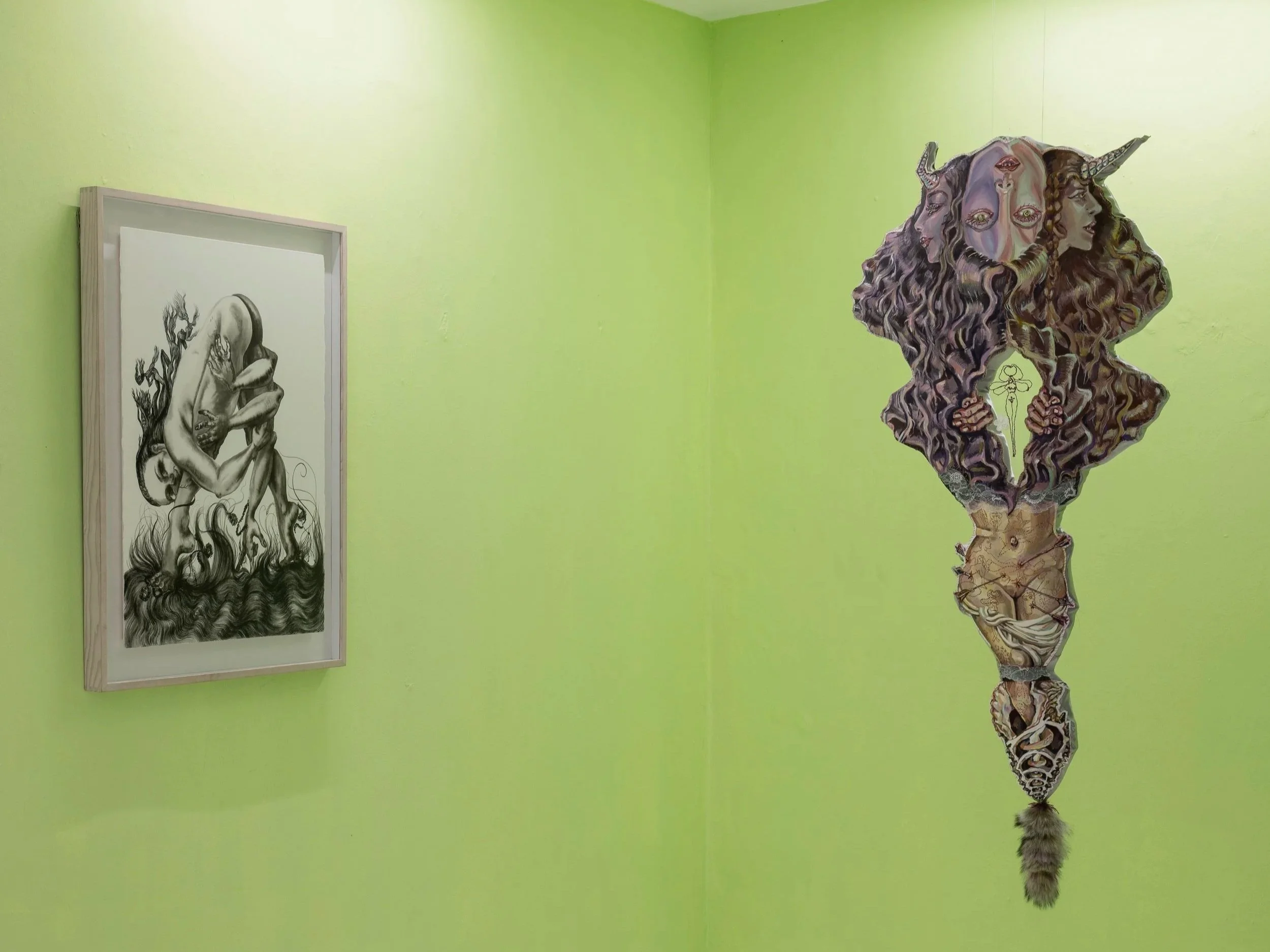
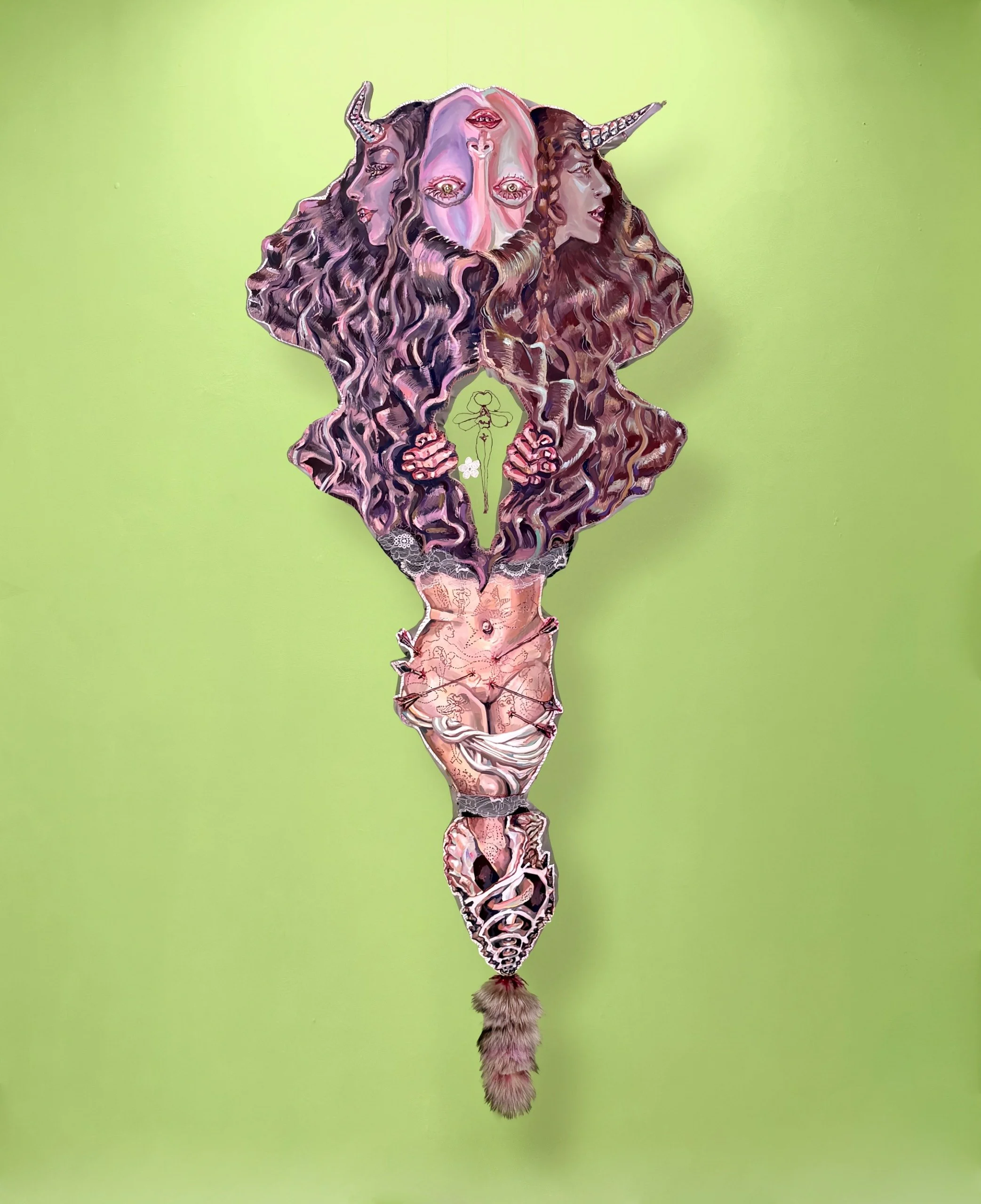
Nicole Chaput expands painting until it becomes body, working through a deeply carnal and tactile painterly language. Her speculative anatomies of those who call themselves women carry fragments of art history, popular culture, mythology and religious iconography, where Madonnas, brides and Medusas cease to function as fixed archetypes and instead merge, fracture and continuously reinvent one another. Rather than illustrating these references, Chaput allows them to inhabit the same body, transforming each figure into a dense landscape of accumulated narratives. In doing so she unsettles inherited representations of femininity and the gendered gaze through which female bodies have historically been constructed. At the same time, her paintings refuse the limits of the pictorial plane. Relief, sculptural supports, textiles and suspended forms allow painting to acquire weight, volume and physical presence, occupying the gallery as bodies rather than images.
Saelia Aparicio expands drawing until it becomes world. This universe borrows as much from cartoons, folklore, fairy tales and science fiction as it does from speculative biology and ecological thinking. Bodies dissolve into roots, flowers, other bodies, architecture and landscapes, proposing new forms of coexistence between the human, the environment and the more-than-human. Humor becomes a vehicle for imagining radically porous anatomies, where care, transformation and interdependence replace fixed hierarchies. Like Chaput, Aparicio also pushes her medium beyond its conventional limits. Drawing unfolds into sculpture, benches and mural, transforming the exhibition into an environment where images become inhabitable.
Together, these two practices propose expansion as both method and metaphor. The body exceeds anatomy. Painting exceeds the canvas. Drawing exceeds the page. Language exceeds grammar. Cada cuerpo es Otra does not ask what a body is. It asks how much a body can contain. Another self. Another species. Another memory.
Another possibility. In the space opened between these works, hybridity is not understood as the fusion of fixed identities but as the continuous refusal to be confined within binary thinking.
Perhaps every body is, indeed, another.
Curated by Polina Stroganova