CURRENT EXHIBITION
fake gods - Aldo Chaparro
SEPTEMBER - OCTOBER 2026
All that glisters is not gold;
Often have you heard that told:
Many a man his life hath sold
But my outside to behold.
Gilded tombs do worms enfold.
Had you been as wise as bold,
Young in limbs, in judgment old,
Your answer had not been inscrolled
Fare you well. Your suit is cold.
William Shakespeare, Merchant of Venice, Act II Scene 7
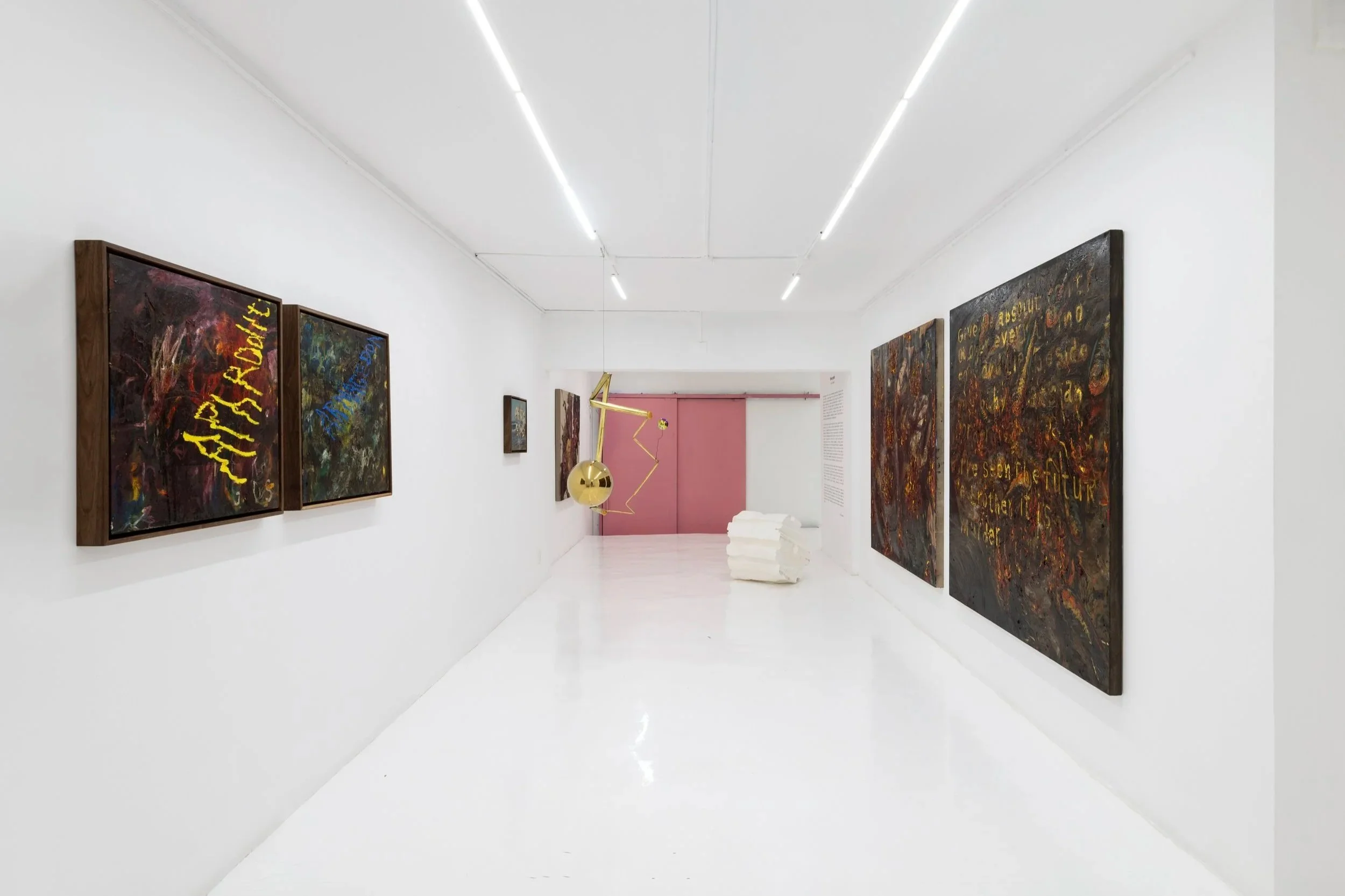
The death of painting and its returns have been proclaimed repeatedly at different moments throughout its history. Such pronouncements have functioned as intellectual provocations and as symptoms of moments in which certain paradigms shift. Its displacement from—and toward—the center of modern and contemporary art responds to consensuses and disagreements around what is urgent or pertinent according to particular waves of thought, taste, and consumption among those who collect, disseminate, and write the history of art. Precisely to move against the current of any such wave and its categorical resolutions, to “go against the grain,” is one of the practices underlying the artistic work of Aldo Chaparro, who today enters the medium as a personal and professional strategy for thinking through his surroundings from the exciting position of a self-taught apprentice of a craft that, while not unfamiliar to him, is new and particularly suited to narrating what he needs to say today, without taking into account social expectations or whether the moment is “the right one.”
In addition to being part of an aesthetic inquiry and a post-pandemic phenomenological exercise, the body of work fake gods rejects its context and proposes an escape from a certain contemporary visual culture that is as apocalyptic and real as it is manipulated and artificial. Emerging from the synthesis of an accumulation of learnings and interests that now find their epicenter in painting, this group of works suggests a strategy for attempting to distinguish what is essential amid today’s mirages and media cacophony. To discern what is essential to life from the excessive and numbing consumerism, desire for power, and entertainment that promise spiritual happiness or a sense of belonging: the deities of our contemporary world.
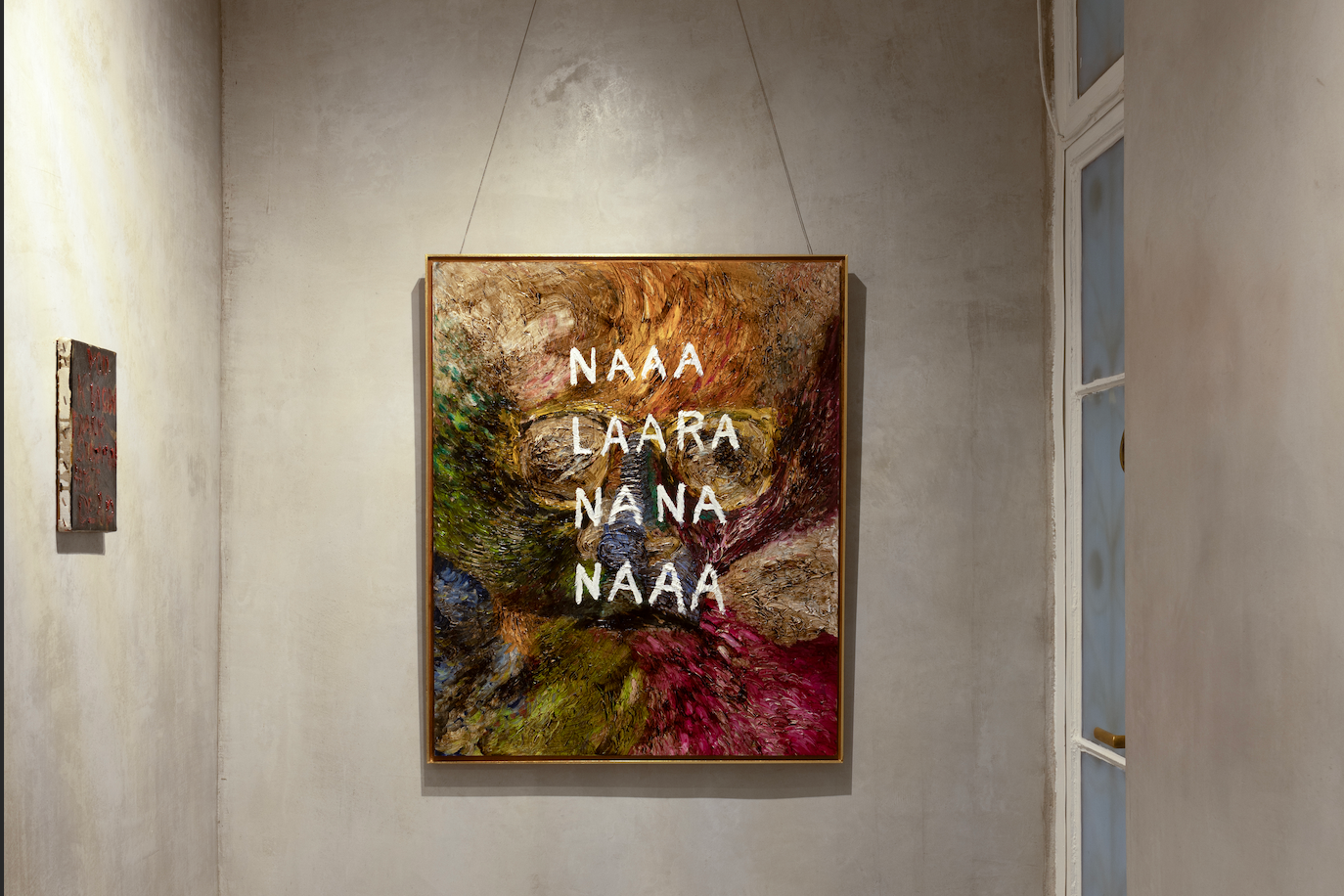
Within the context of a successful career as a sculptor, editor, and producer of objects associated with luxury and refinement, and after years devoted to three-dimensionality, the magic of creating volume, depth, light, and atmosphere on a flat surface has its own particular charm—and its own challenge. Regardless of whether the prevailing consensus is that “Painting” is or is not in crisis, or whether it can or cannot coexist with conceptualisms, for Aldo Chaparro painting has represented the ideal platform from which to reject standardization and favor singularity. At a historical moment defined by mass misinformation and aspirational overconsumption, the pace of painting and its capacity to be practiced in solitude proved to be the ideal means through which to rediscover curiosity, surprise, and the personal commitment to attaining technical skill. To delve into other rules and other steps to follow, into temporalities with different rhythms and alternative ways of measuring the passage of days and one’s own productivity, while sustaining ideas that are not so far removed from his previous interests.
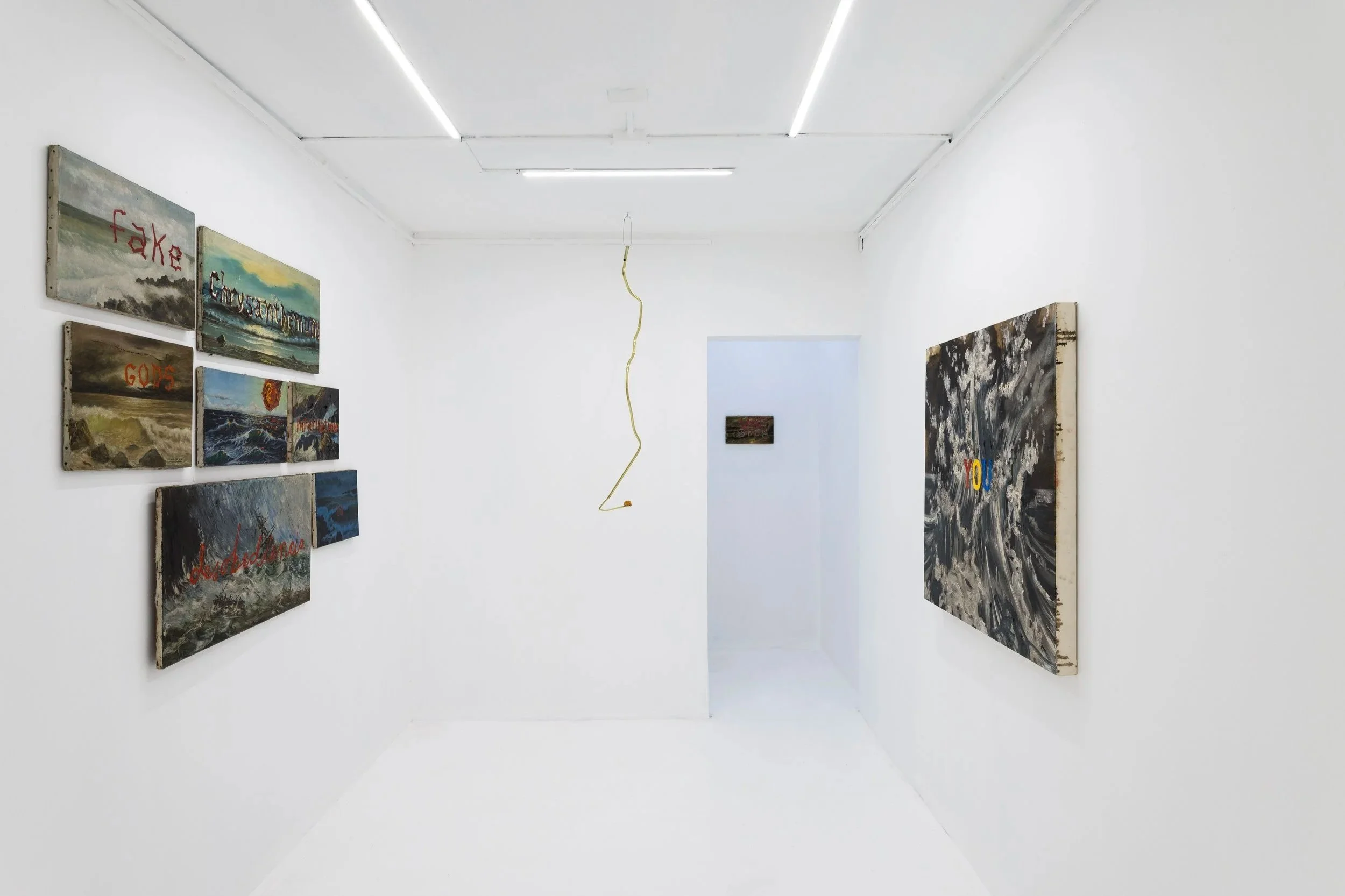
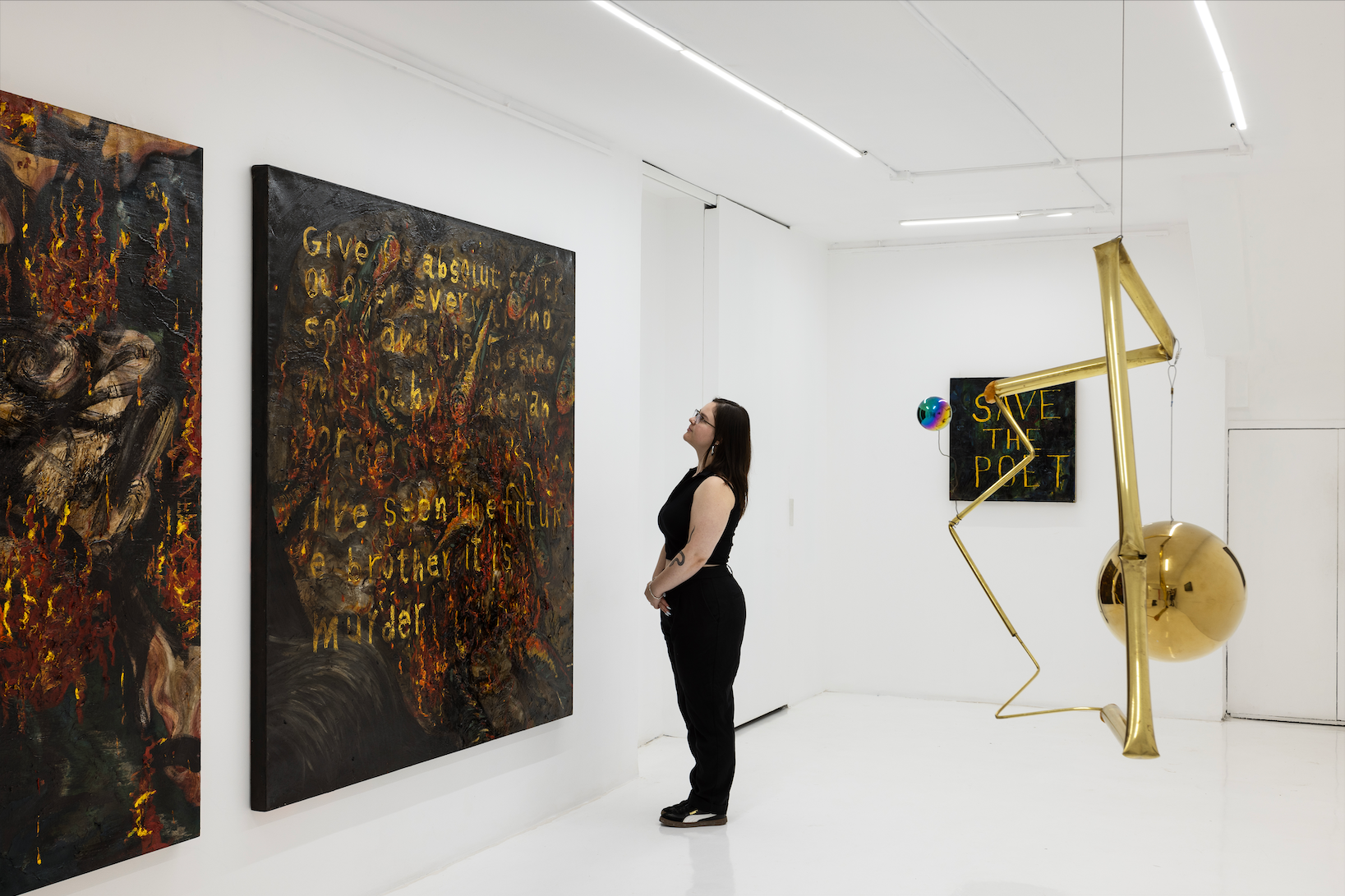
After four years of studying and refining a new language through which to elaborate what sculpture does not allow him to express, the genres remain recognizable but are, at the same time, “misaligned” by the artist. Like the garden that contains and surrounds his studio, the scenes he offers us are neither entirely wild nor completely pristine. Neither purely figurative nor entirely abstract. Altered seascapes, still lifes, and disarticulated nature morte become the site where his present and his accumulated experience meet, generating new editorial associations, historical citations, and material propositions that speak to his private context as it intersects with concerns about the state of things on a global scale. In this universe, humanity’s atavistic threats have a place: a meteorite, a fire, an erupting volcano, yet they coexist with flowers and with the familiar. Terror and love meet in landscapes that speak of a
relationship with the world that is perhaps more cynical, yet sensitive at the same time—not merely seeking to imagine scenarios, but as a way of thinking through the acts of inhabiting and perceiving. As a place in which to digest fears and conjure dreams that sometimes become nightmares; to reflect on the connections and tensions between precision and accident, the industrial and the handmade, life and death, certainty and the unpredictable.
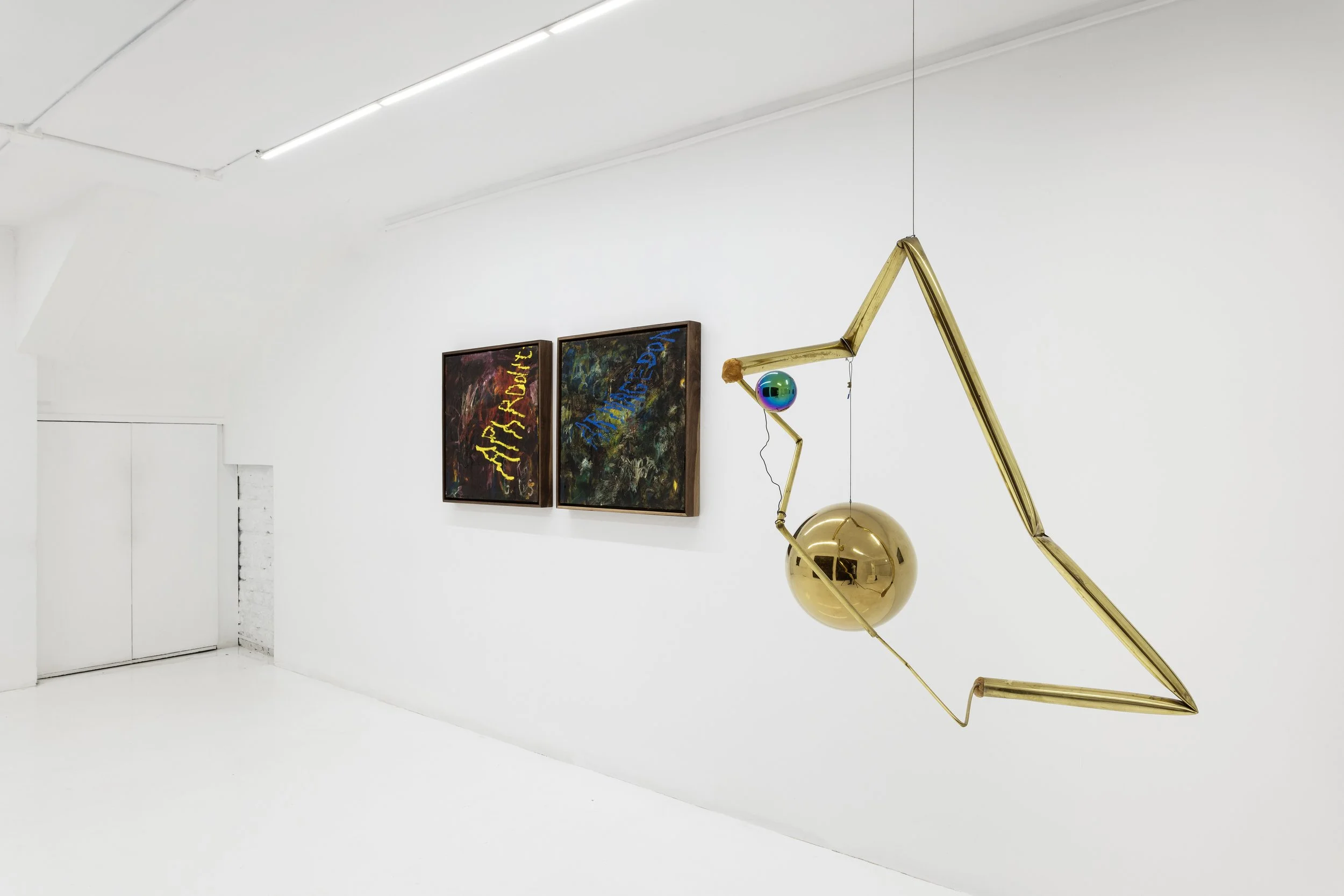
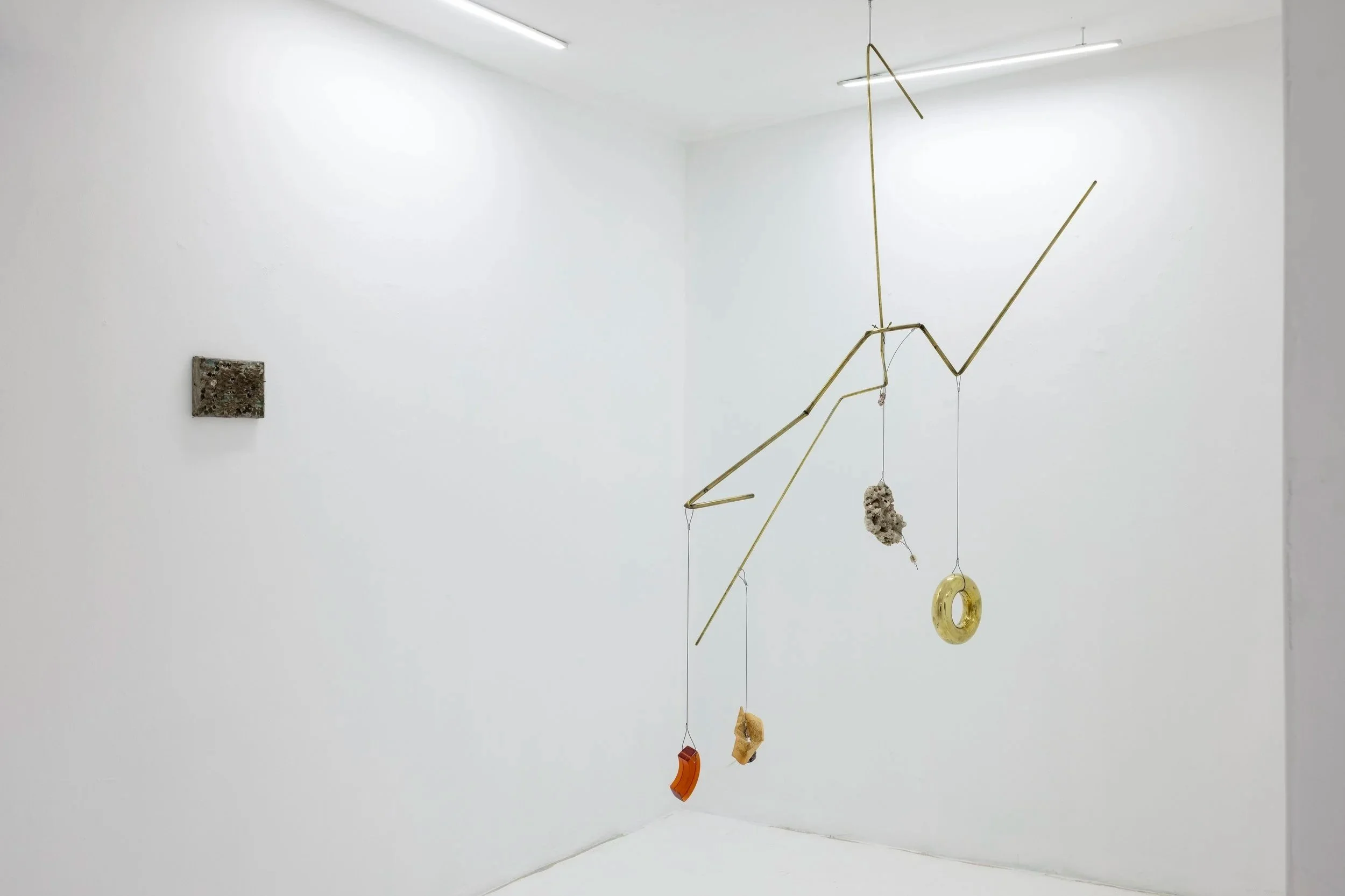
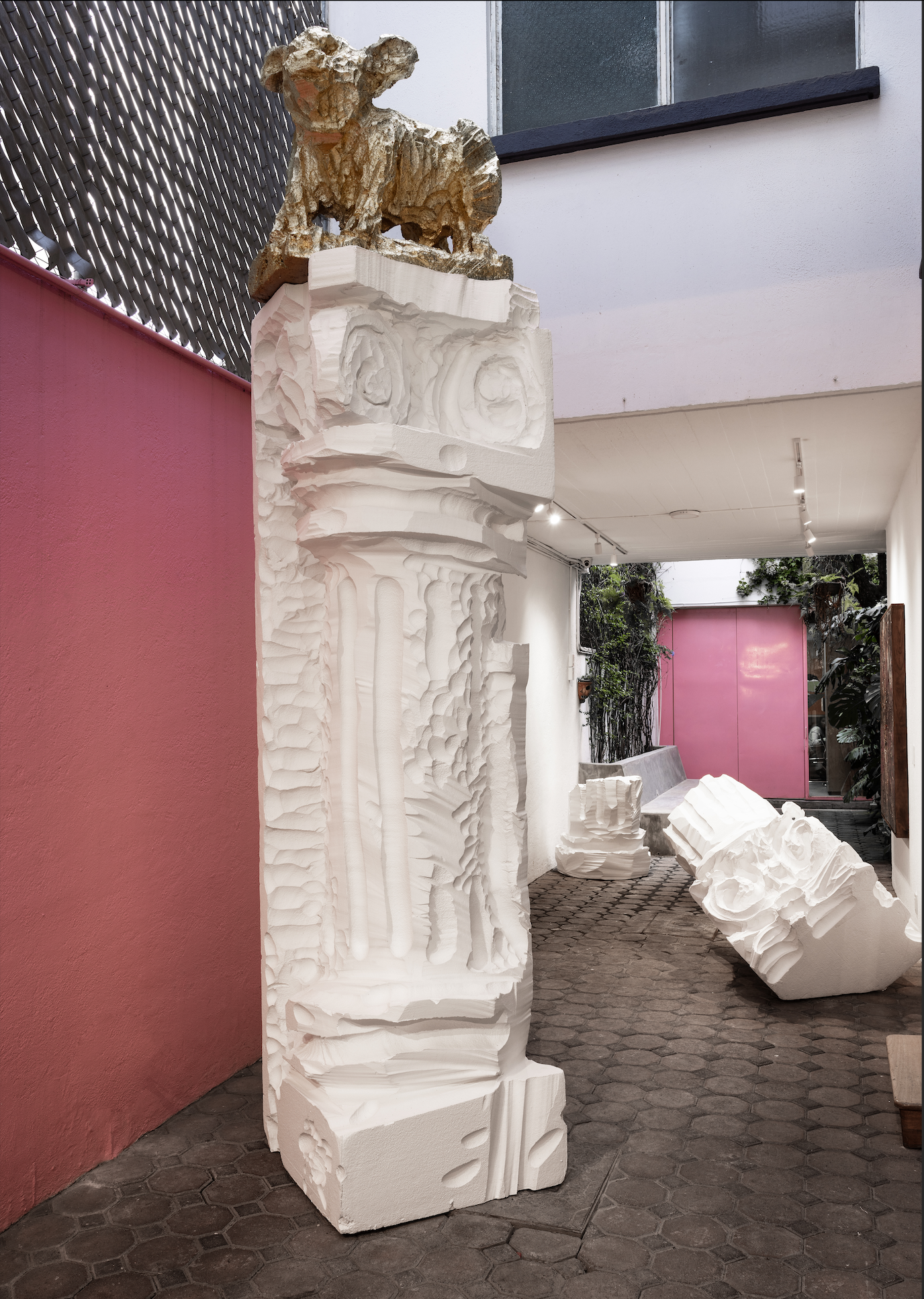
These paintings enter into dialogue with the mobiles and sculptures made from new materials that developed in parallel with the painting practice, and share many of the conceptual concerns found in previous works. Through the use of recycled materials commonly regarded as garbage and as lacking a reason for being, these pieces address questions of hierarchy, transformation, and the balance between values. Who decides what has value and what does not? In relation to what? Like a neural network in which value is established in relation to—and not despite—what surrounds it, these works combine the expensive with the disposable, luxury with the residual (gold, associated with the precious, alongside plastic caps or dead animals, for example) to offer a practical reflection on the categorization of materials: what detracts from one component adds to another, proposing the possibility of imagining a balance as both a formal and conceptual quality.
Taken together, painting, sculpture, and mobiles continue to insist on certain necessary dialogues between the conceptual and the pop, matter and gesture, certainty and deception, precision and accident, expression and self-control, chaos and beauty, sumptuousness and austerity. This new body of work avoids realistic or defined representation and instead focuses on forms and surfaces that emerge from studied yet intuitive gestures, highlighting the texture and physical dimension of the works. It emphasizes the ways in which light and point of view transform perception, while bringing into relief the tensions and possible balances between order and imperfection, truth and deception.
This body of work can be understood as a collection of sorts—an array of talismans intended to evade the temptation of falling into the bright and deceptive traps of our contemporary gods. Yet rather than warning us about the dangers of the algorithm, AI, consumerism, or the cult of economic performance, eternal beauty, and eternal youth, fake gods questions which images and information demand our gaze and attention in order to organize a more balanced experience of the world.
Tania Ragasol