PAST EXHIBITION
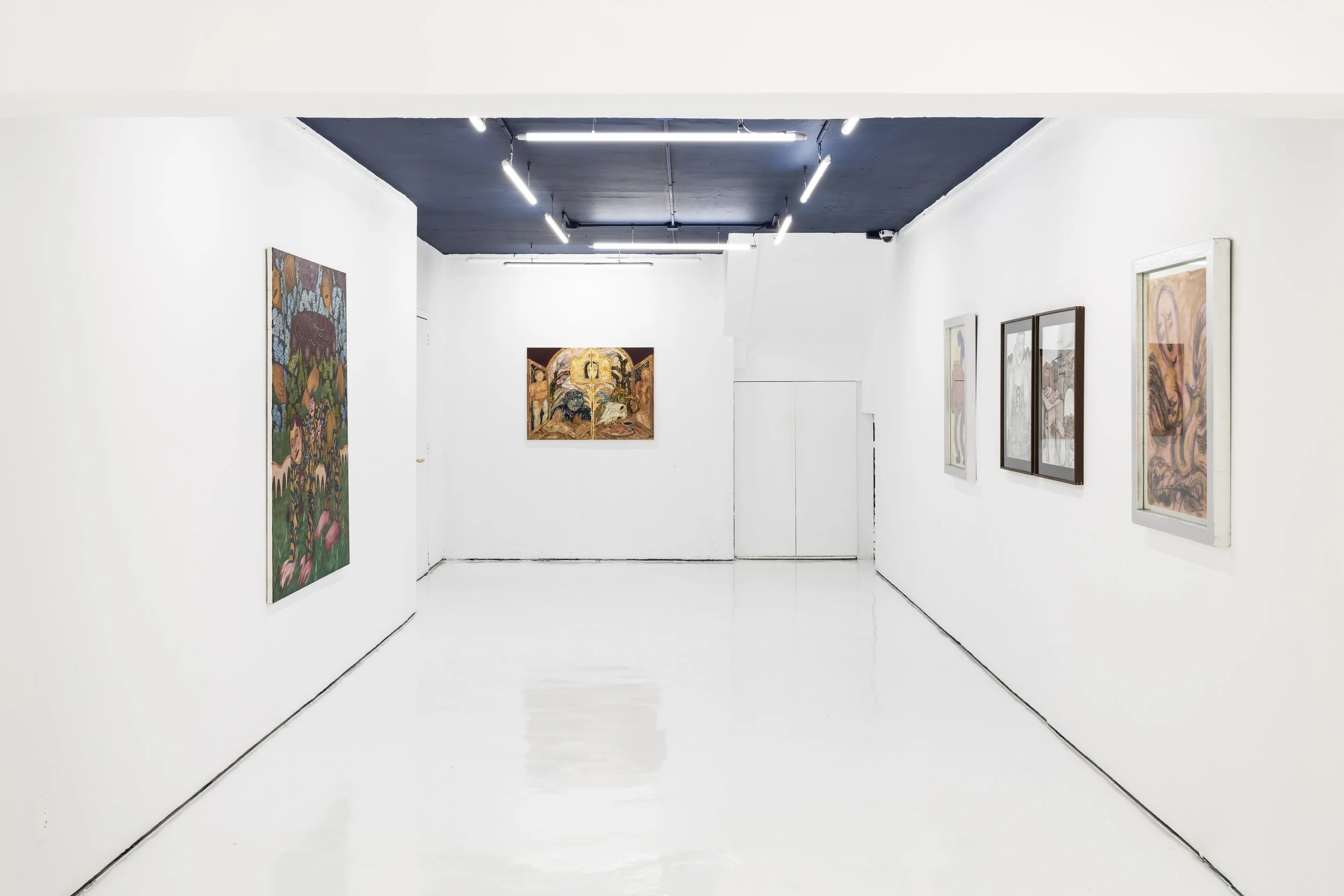
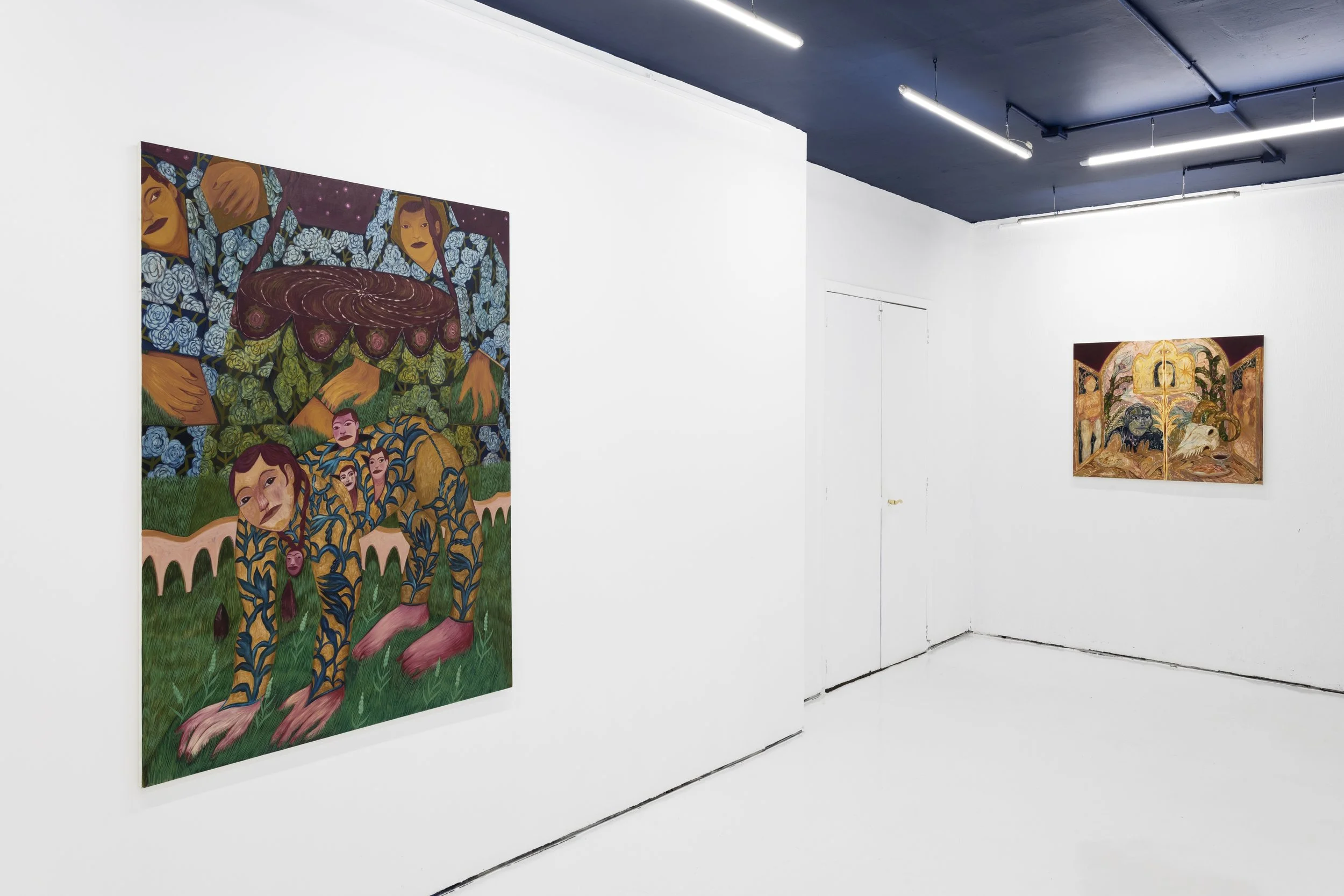
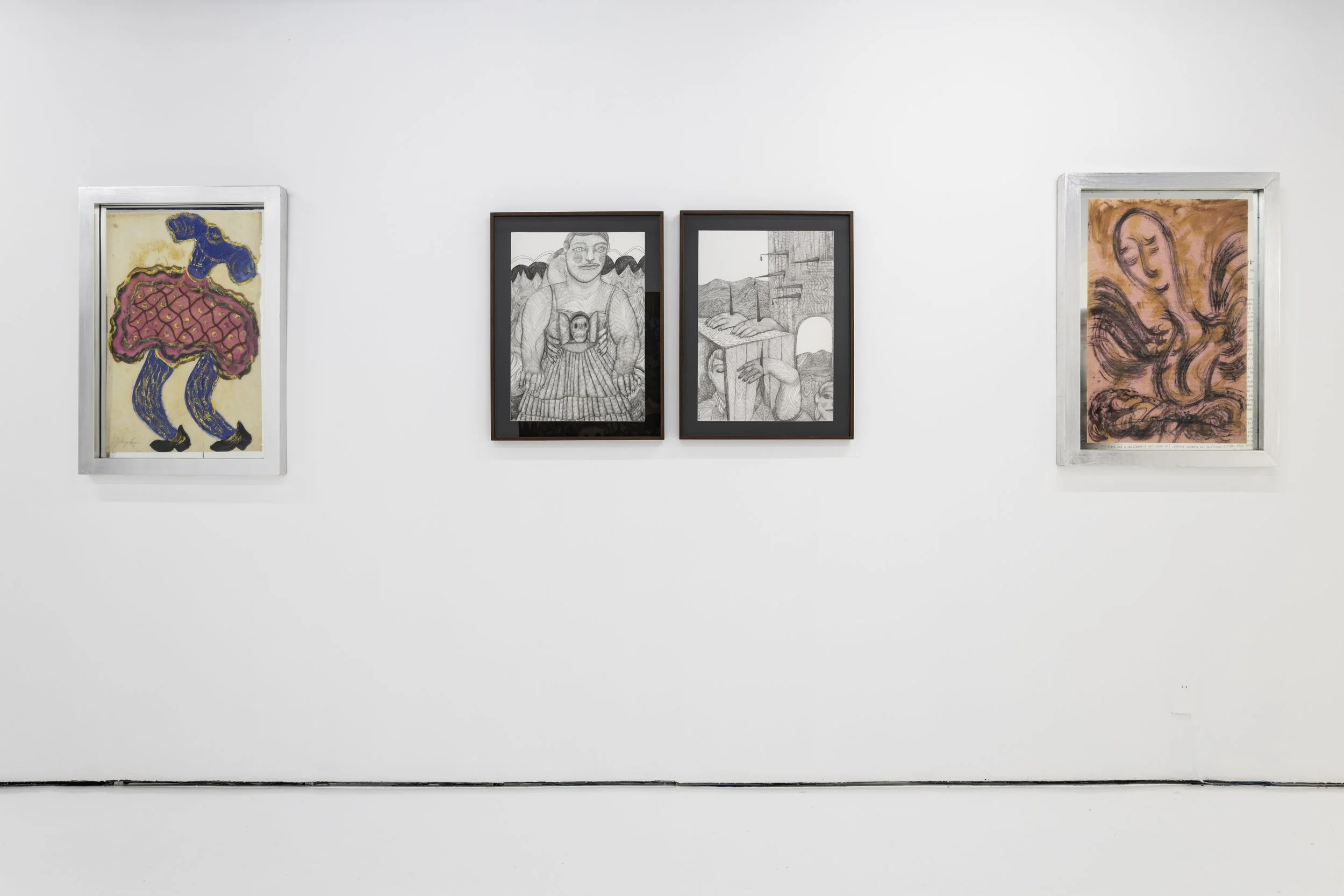
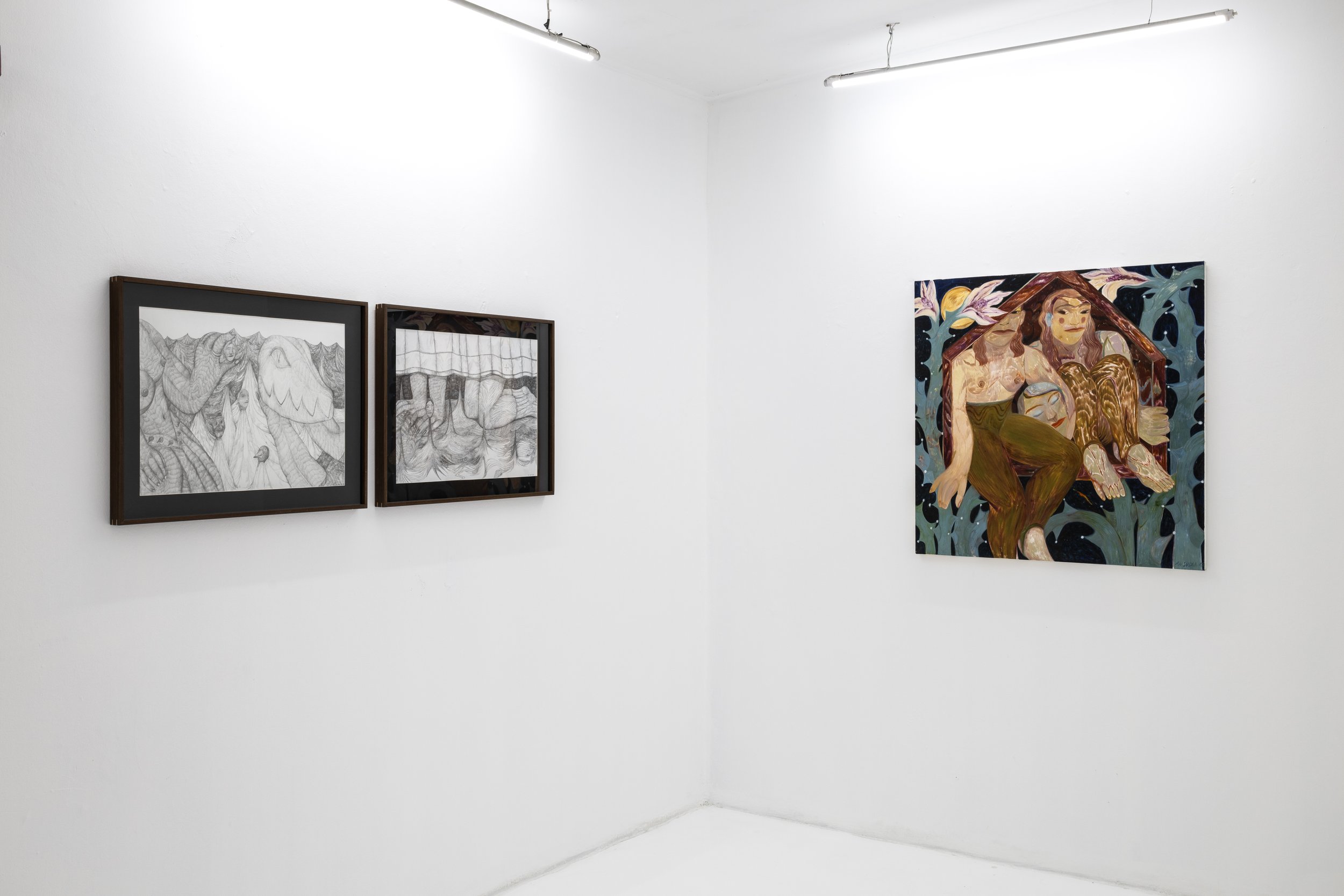
SACRIFICIAL RITES- RUSUDAN KIZANISHVILI, CHUCHO REYES
NOVEMBER 2025 - JANUARY 2026
“Now I think every person is a story and I am looking for a title for all of them. If I meet you somewhere and you start talking to me I would momentarily imagine that you are a story and I will find a title for you.” Goderdzi Chokheli
Dual presentation of the accomplished Georgian artist Rusudan Khizanishvili and well-known Mexican artist Chucho Reyes opens up a unique avenue for intercultural discourse between Georgia and Mexico. Khizanishvili represents the post-Communist generation of Georgian female painters, sharing their difficult path of overcoming generational, hierarchically gendered, and post-colonial trauma while finding presence among the contemporary art landscape.
Jesús Reyes Ferreira, (1880-1977), known as Chucho Reyes, was a self-taught artist, art collector, and stage set designer who, for many decades, stands out in the art history of Mexico for his idiosyncratic language nourished with folk traditions, juxtapositions, and forms. In their own way, both artists are grounded in their sources, geohistorical characteristics, and concerns, but neither one of them is just a passive observer.
Both Khizanishvili and Reyes exemplify their national visual traditions while staying far away from cliches or banal appropriations of the common symbols. This exhibition looks at what themes also unite them, one of them being the concept of a sacrifice, either in a literal or a metaphoric way.Conceptual keys to this visually enriching exhibition full of hidden allusions could be found in diverse sources, including Human Sadness, a 1984 Georgian post-modernist novel by Goderdzi Chokheli, Violence and The Sacred, a 1972 treatise by French poststructuralist René Girard, as well as the concept of horizontal art history first introduced by the Polish art historian Piotr Piotrowski in 2009. Theory of horizontal art history is important here as it brings the visual traditions separated by oceans and mountains into a one communicative and chronological device where artists use individualism to overcome the anxiety of influence artificially created by postcolonial subjugation to the western traditions. The exhibition on view is an example of this approach to art history.
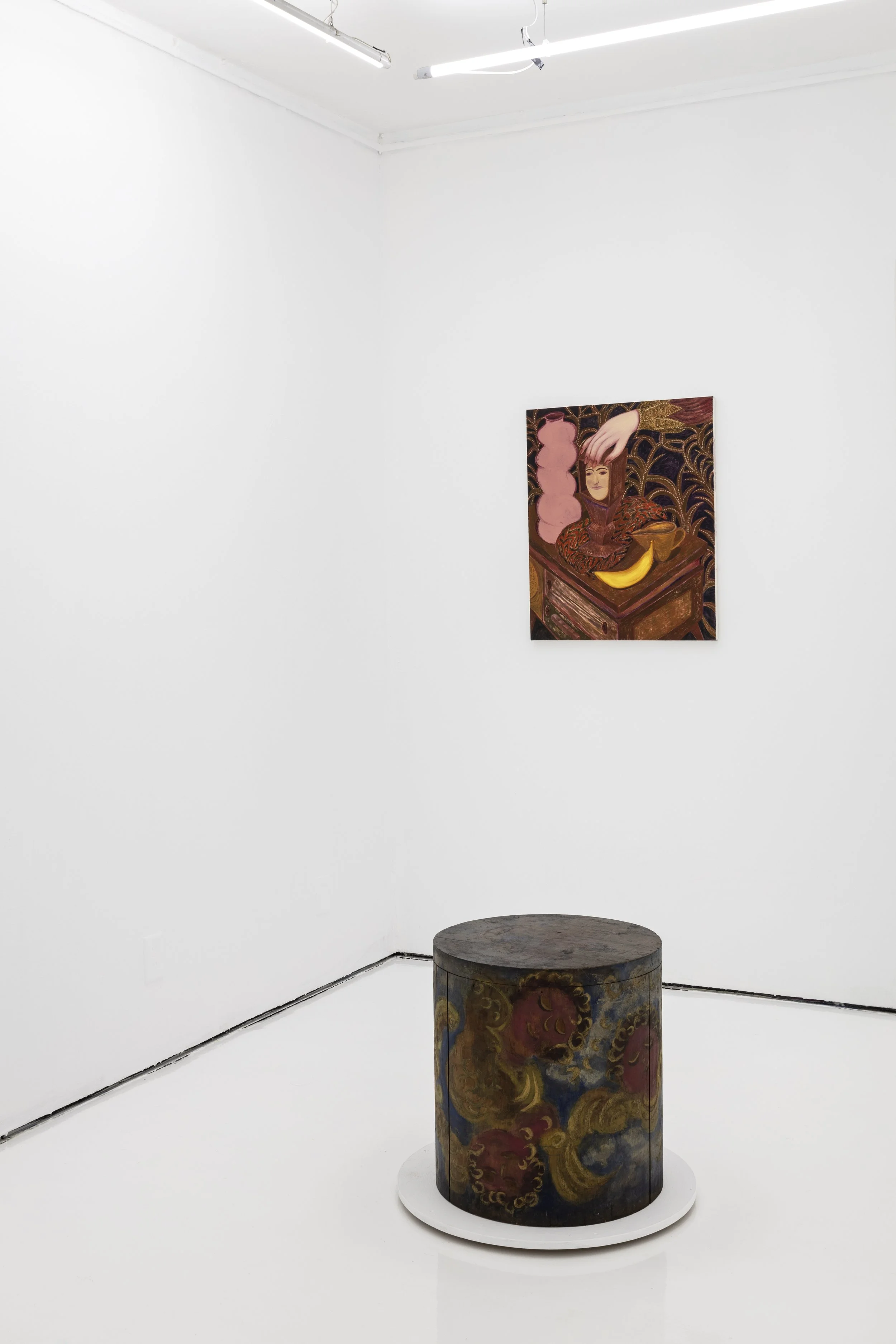
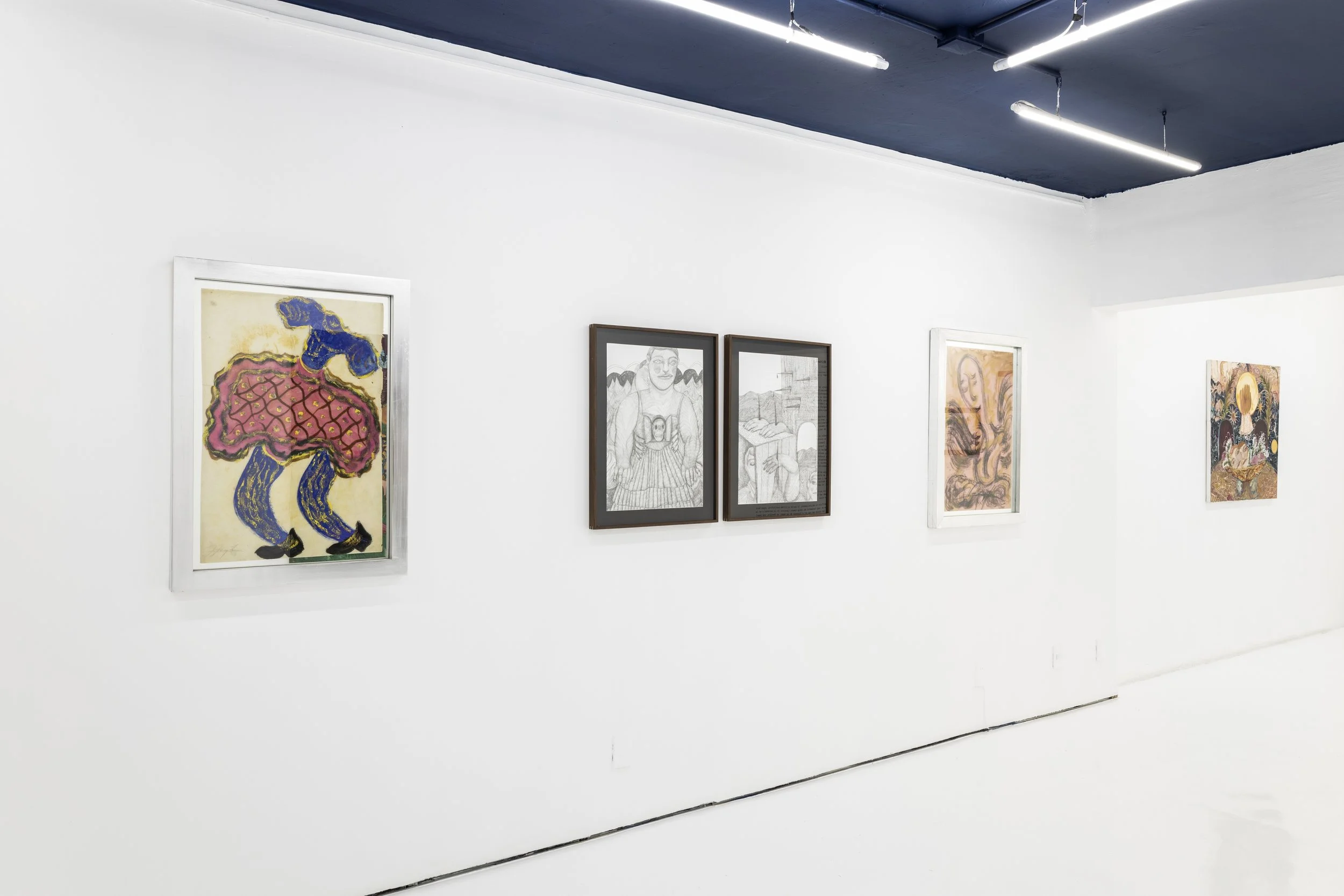
Presented paintings and drawings by Rusudan Khizanishvili, created in 2024-2025, all focus on offerings, albeit of different types. There is not a single tautology or repetition in these rich, textured, expressive representations imbued with personal symbolism and concern for human fate in a post-human world, characteristic of the artist. For Khizanishvili, the concept of sacrifice is the symbol of rebirth, when one thing is lost for the new one to emerge. Sometimes this means sacrificing one’s own fears, traumatic memories, and personal spaces so that the works in return gain presence. For the artist, this process is almost a ritual – a recalibration of personal equilibrium which is transformed into her creative method. The concept of sacrifice, or rather the idea of a surrogate victim, as outlined by René Girard, is a fundamental characteristic of the human and genetic code. Someone in society or a family is paying for the well-being of the rest; in Georgia, it was habitually a role played by women. Observing this process from this historical standpoint is rewarding as our archaic past meets our digital future.
Chucho Reyes also shows us the transformation of his realistic ecosystem into symbols of his own aesthetic. Sacrifice here is fleeting and metaphoric in nature. Poetic flights of fancy on the ephemeral sheets of crêpe paper use architectonic images of angels and joyfully transcended figures that are about to welcome a more joyful reality. Offerings gracefully provided by Khizanishvili are the price we have to pay for it.
Curated by Nina Chkareuli